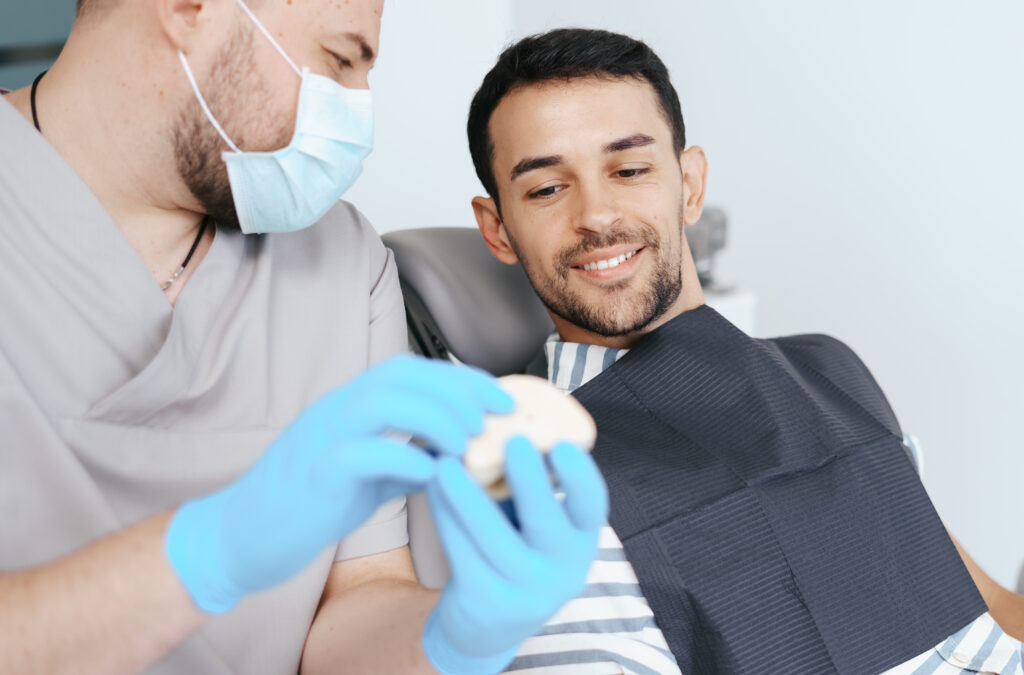
Well, to start, it’s a great question. A dental implant is one of the most reliable solutions for replacing missing teeth. Now, to answer this question, how soon they can receive one after a tooth extraction is crucial. The answer has no fixed metrics, but a timeline alongside other metrics. As each person has a different healing phase, bone stability, and overall oral health, recovery varies among different people. Understanding this timeline helps patients plan their treatment journey and achieve long‑lasting results. So let’s delve more into the following article.
What relevance does timing hold while getting a dental Implant?
Well, to be honest, implants are surgically placed tools into the jawbone to act as an artificial tooth root. Let us break it down for your better understanding.
-
Healing is a mandate.
Just picture this: would you operate on an already open wound? No, right? For the implant to succeed, the bone must heal properly after extraction.
Placing a dental implant too early can interfere with healing, while waiting too long may lead to bone resorption (loss of bone density), which complicates the procedure.
-
Timing matters the most—but why?
“For the procedure to achieve the best results and long-term efficacy, ensuring adequate healing time is essential. Here is why timing matters the most.
- Strong bone integration (osseointegration)
- Reduced risk of infection or implant failure
- Better long‑term stability and aesthetics
The timeline you need to follow for a dental implant to do its job
In this section of the article, we shall explore the healing timeline, the role of the implant dentist in Newport Beach, if any, and other crucial prerequisites
1. Typical healing time
-
Immediate placement
If the extracted tooth site is healthy, injection-free, and has sufficient bone, then the dental implant can be placed immediately.
This is most commonly done, as it reduces the treatment time and preserves bone structure.
-
Early Placement
Unlike the same-day one, this is common for patients who need to undergo a small dental implant surgery.
The phase generally takes 2-3 months
This process allows your gum tissue to heal and the bone to stabilize
-
Delayed placement
This takes place between 4 and 6 months.
The process is recommended when bone grafting or extended healing is required.
Ensures that the site is strong enough to support the implant.
-
An extended timeline
Ideal for patients with complex oral health issues or who have infections and have gone through multiple extractions.
These have a deeper connection with larger treatment plans like Full Mouth Restoration in Lomita.
The time span is more than 6 months
2.Factors behind the waiting period
Just as each person is unique, their healing and ways of responding are also different. Here are some common factors to look into
-
Bone quality and dentistry
Strong bone supports faster implant placement. Weak bone may require grafting.
If the bone is thin, porous, or has deteriorated due to tooth loss or disease, bone grafting or sinus lifts may be required. These procedures add healing time before the implant can be placed.
-
Presence of infection
Any infection in the gums or jawbone must be fully treated before surgery to prevent implant failure.
After infection treatment, the tissues need time to recover and stabilize, which delays the implant timeline.
Antibiotics or other therapies may be prescribed to ensure the surgical site is free of bacteria before implant placement.
3. The overall health
-
Medical conditions
Chronic illnesses such as diabetes, autoimmune disorders, or osteoporosis can slow healing and increase the risk of complications.
-
Lifestyle factors
Smoking, excessive alcohol consumption, or poor nutrition negatively affect blood flow and bone regeneration, prolonging recovery.
-
An innate immune response
A strong immune system supports faster healing, while compromised immunity requires longer monitoring and recovery periods.
4. The role of specialists
-
Experience that matters
An experienced implant dentist in Newport Beach or any trusted professional will evaluate bone health, gum condition, and readiness using advanced imaging. They determine whether immediate or delayed placement is best. Their expertise ensures that implants are placed at the right time for maximum success.
-
Comprehensive Evaluation
Bone and gum health: Specialists assess jawbone density and gum condition to confirm stability for implants.
Advanced imaging: CT scans and digital X-rays are used to create precise treatment plans.
Systemic health review: Medical history and lifestyle factors are considered to ensure safe surgery.
-
Expertise and Technology
Specialist-led care: Dr. Smile’s team includes implantologists, oral surgeons, and prosthodontists, eliminating the need for external referrals.
Precision tools: Guided surgery and digital planning ensure accurate placement.
Comprehensive services: Patients benefit from integrated care under one roof, streamlining the process.
-
Locations and Accessibility
Dr. Smile Dental Group operates in four locations, including Newport Beach, Lomita, San Pedro, and Orange County, making expert care accessible to a wide patient base.
Convenient consultations: Multiple offices allow patients to choose the location best suited to them.
Unified approach: Regardless of location, patients receive consistent, high-quality care from specialists trained in advanced implant techniques.
The bottom line
Dental Implant placement after extraction is not a fixed timeline—it depends on your unique oral health and treatment goals. Some patients benefit from immediate placement, while others may need months of healing before surgery. Consulting with a skilled dentist ensures the right approach, whether you’re restoring a single tooth or pursuing a comprehensive solution. With careful planning and proper timing, implants can provide a healthy, confident smile that lasts for decades. Hope this guide answers all your questions. For any other query, drop in at any of our branches
Frequently Asked Questions
1.How soon after a tooth extraction can I get an Implant?
The timeline varies depending on your oral health and the condition of the extraction site. In some cases, implants can be placed immediately if the bone is strong and infection‑free. More commonly, dentists recommend waiting two to three months to allow the gum and bone to heal.
2. Why is healing time so important before placing an Implant?
Healing time allows the jawbone and surrounding tissues to stabilize after extraction. If an implant is placed too early, the bone may not be ready to support it, leading to complications or implant failure.
3.What factors influence how long I need to wait for an implant?
Lifestyle factors such as smoking, diabetes, or poor oral hygiene can also slow recovery. Finally, treatment goals matter: patients seeking a single implant may have a shorter timeline compared to those planning a Full Mouth Restoration in Lomita, which often requires staged procedures and longer healing intervals to ensure every implant site is properly prepared.
4. Can I get an implant if I’ve already waited a long time after extraction?
Yes, but additional steps may be necessary. If significant time has passed since the tooth was removed, the jawbone may have resorbed or weakened. In such cases, bone grafting or sinus lifts may be required to rebuild the foundation before implant placement.
5.What are the benefits of waiting the right amount of time before getting an Implant?
Waiting for the appropriate period ensures higher success rates and better long‑term stability. It reduces the risk of infection, implant failure, or complications during healing. Patients also benefit from improved aesthetics, as the gum tissue and bone have time to shape naturally around the implant.








Leave a Reply